
The Legacy of Frank Church
Idahoan Frank Church, a Democrat, served as U.S. Senator from 1957 to 1981. During his tenure, he was the Senate sponsor of the Wilderness Act (1964) and the Wild and Scenic Rivers Act (1968). The Middle Fork of the Salmon River was one of eight rivers on the first wild and scenic list. Later, in 1980, Senator Church led an effort to create the Central Idaho Wilderness Act, which included the Middle Fork of the Salmon. In 1984, in honor of Senator Church, the region was renamed the Frank Church-River of No Return Wilderness. At some 2.4 million acres, it is the largest contiguous wilderness area in the Lower 48, meaning outside of the state of Alaska. The Middle Fork of the Salmon River flows through the Frank Church River of No Return Wilderness.
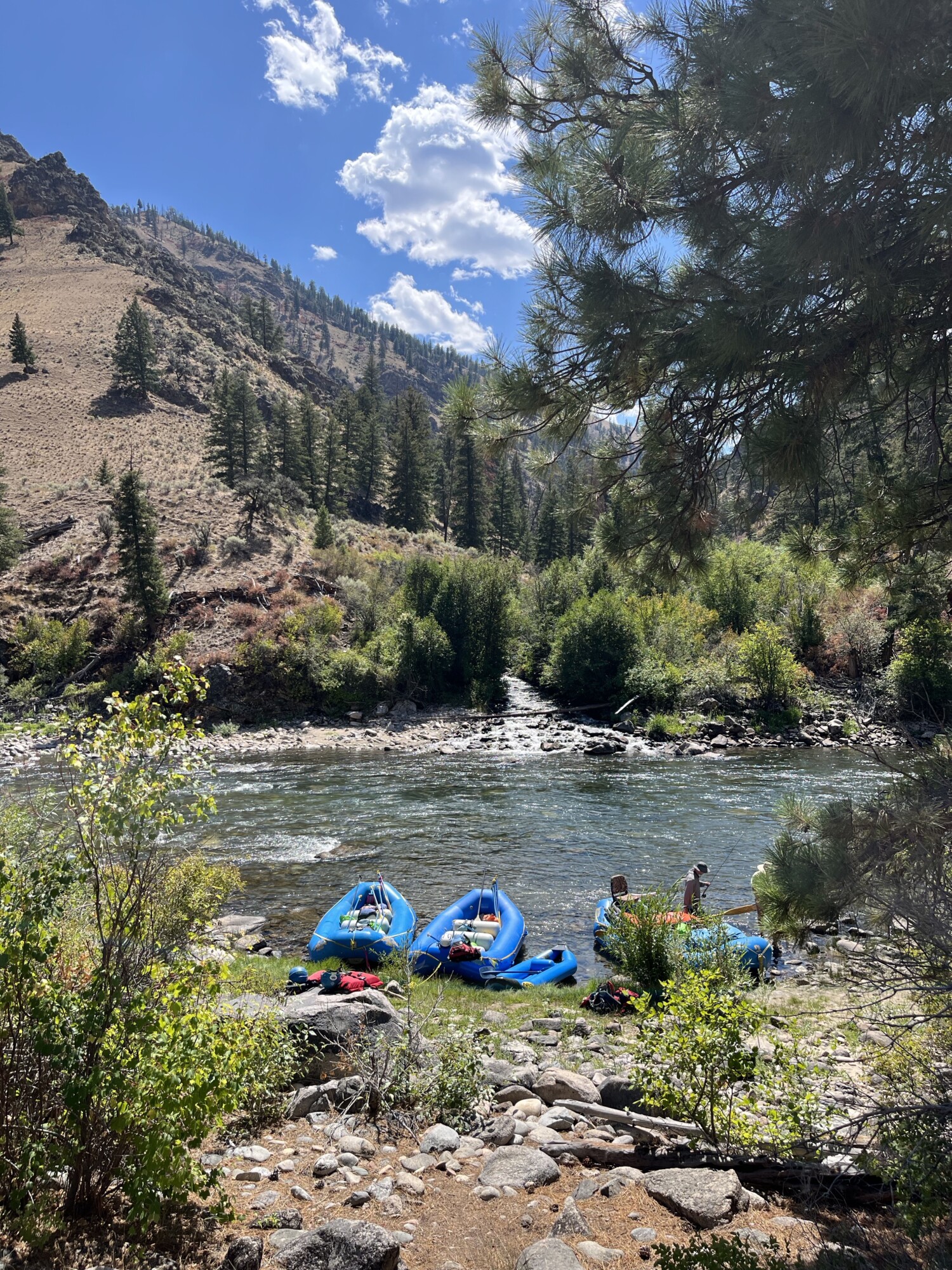
I woke up in the morning after a solid sleep, eager with excitement to be on the river for a full day. A brisk walk to the coffee station, along with other early risers, was my immediate priority. There was a nip in the air, accompanied by the sounds of introductions and soft conversations. Indeed, everyone was ready to get on the river, but first things first, more coffee and breakfast were in order.
Sitting by the river, sipping on coffee, I thought of Senator Church. To be there and going down the river with human power, no cell phone coverage, and the passing of paddle-stroke time from one day to the next, was possible, in part, because of him. His vision, and that of many others, can be found in his words about the passage of the Central Idaho Wilderness Act: “I am content. I have never broken faith with the people of Idaho on this issue. I knew that if we didn’t protect it, it would be gone forever.”
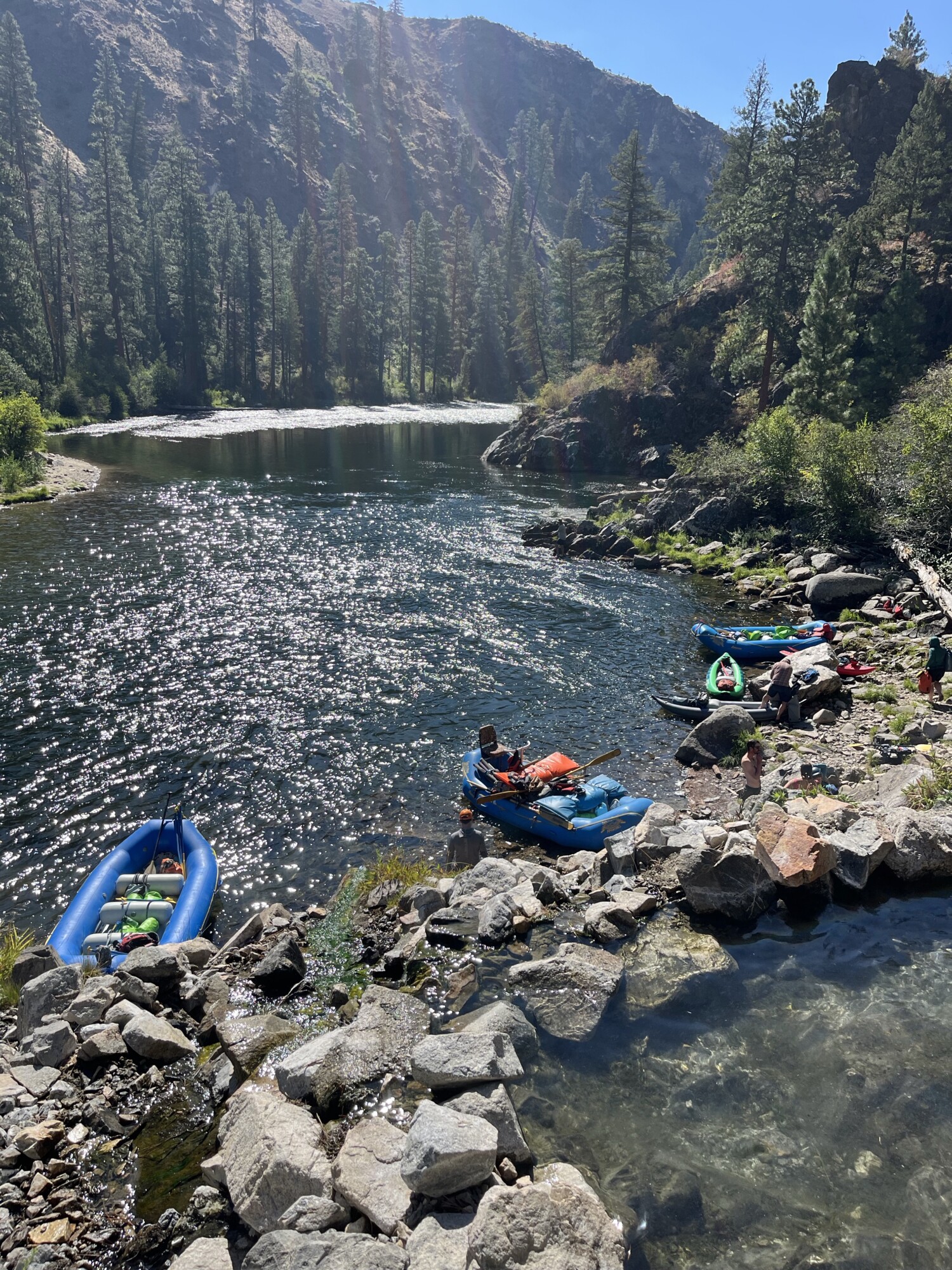
Hot Springs, Rapids, and River Adventures
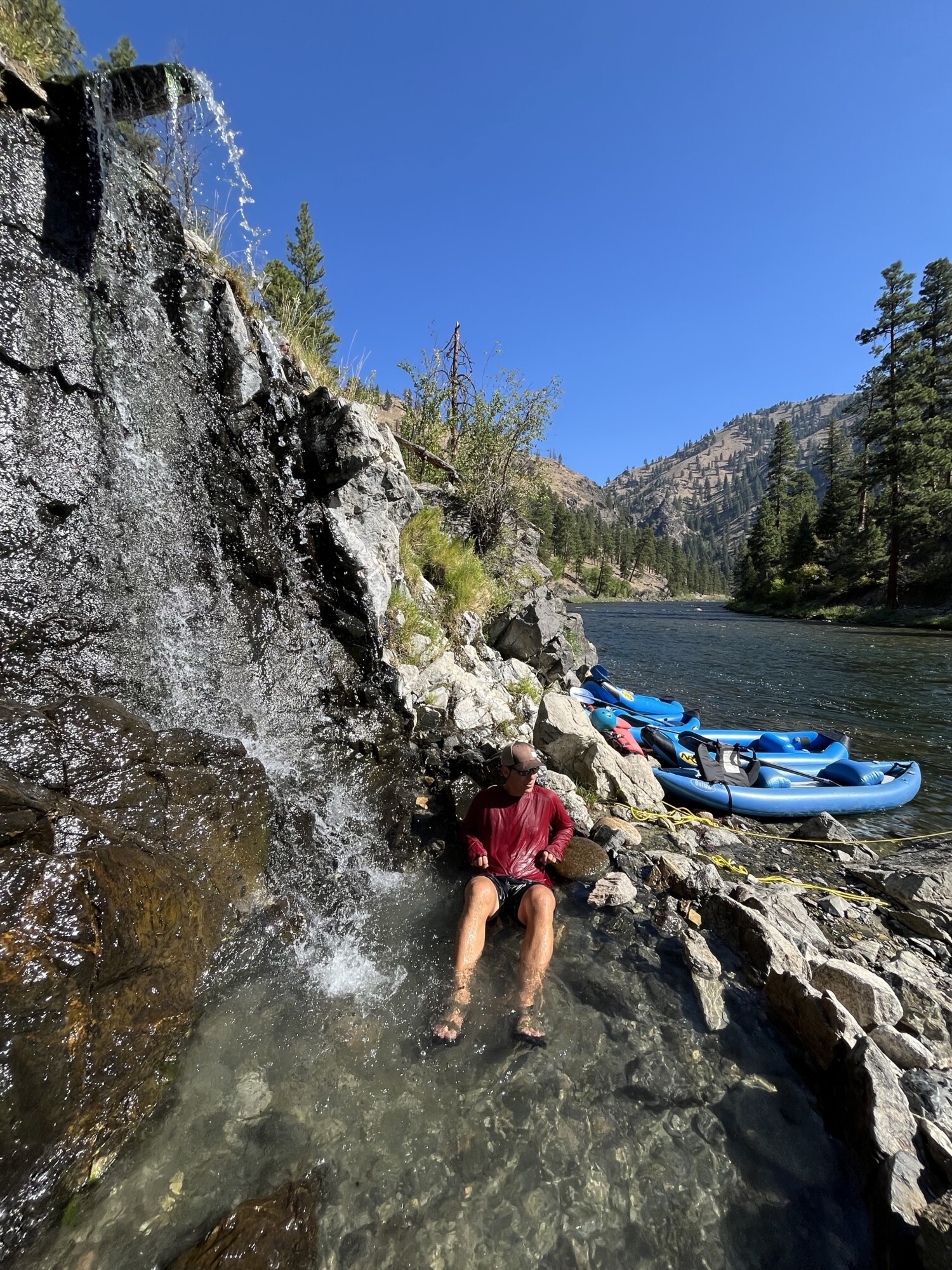
We set out on the morning of day two under warm skies. A fun stretch of rapids a little past camp got the buzz going, lighting us up more than the coffee did. Not long after that, we pulled over river right to indulge in hot springs. Luxurious, indeed, the Middle Fork below coursing its way while my muscles relaxed, along with my mind.
The Tukudeka: First People of the Middle Fork
When we arrived at the lunch spot, we learned that above the river, a short hike up a hill, there was a rock outcropping with pictographs. Up the steep path, many of us went. Careful not to touch, we snapped photographs, reminders of where we were, reminders of those who came before us.
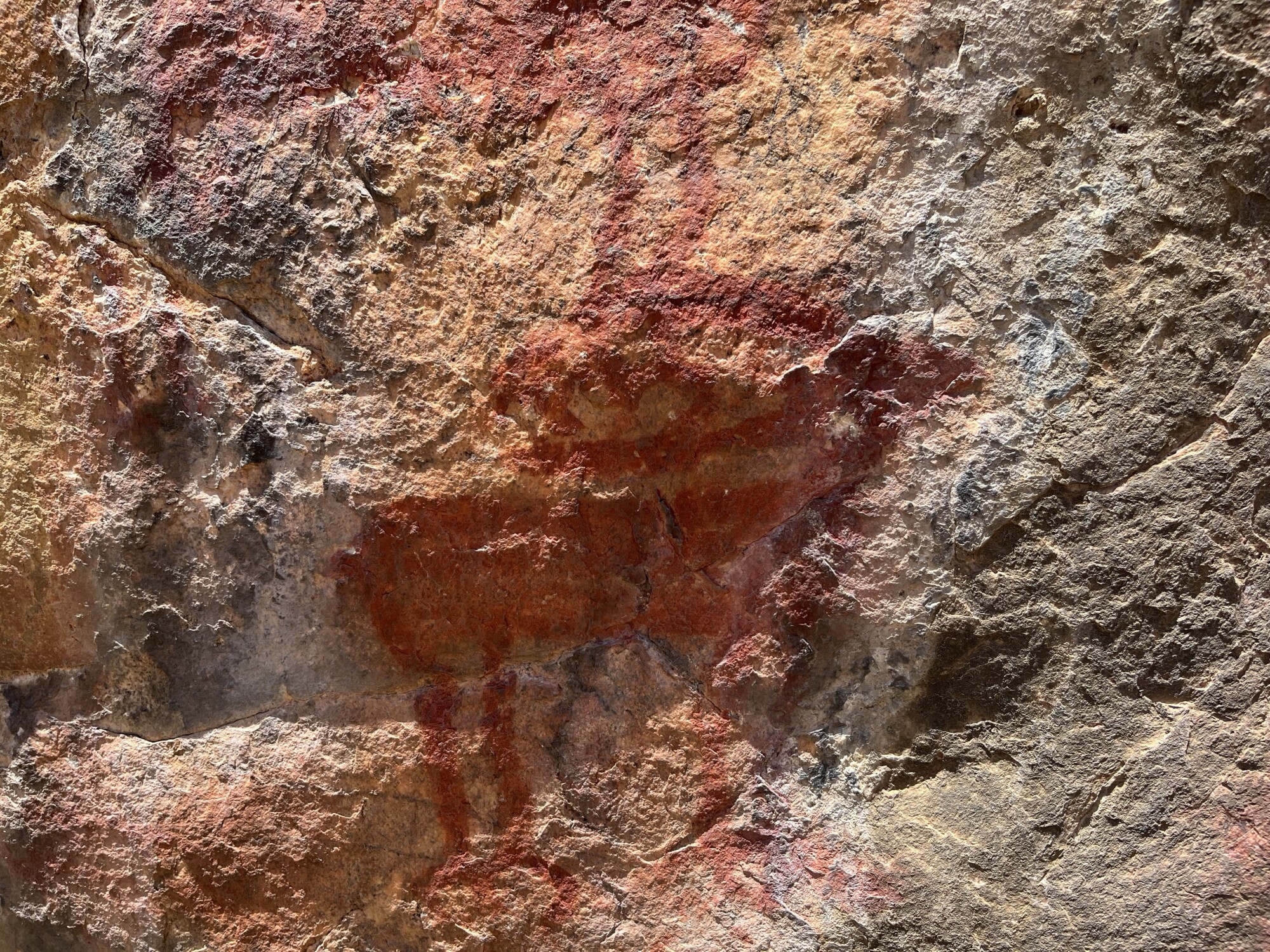
The Tukudeka, a northern band of the Shoshone, were the first people to live along the Middle Fork of the Salmon River. Inhabiting the region for approximately 10,000 years, the Mountain Sheep Eaters, as Tukudeka translates, used the hot springs to soak bighorn sheep horns and then shape them into powerful bows sought after by other indigenous peoples. Masters of hunting bighorns on foot, the steep walls of the Middle Fork did not lend them to adopt horses. They had dogs, which were used to transport their possessions.
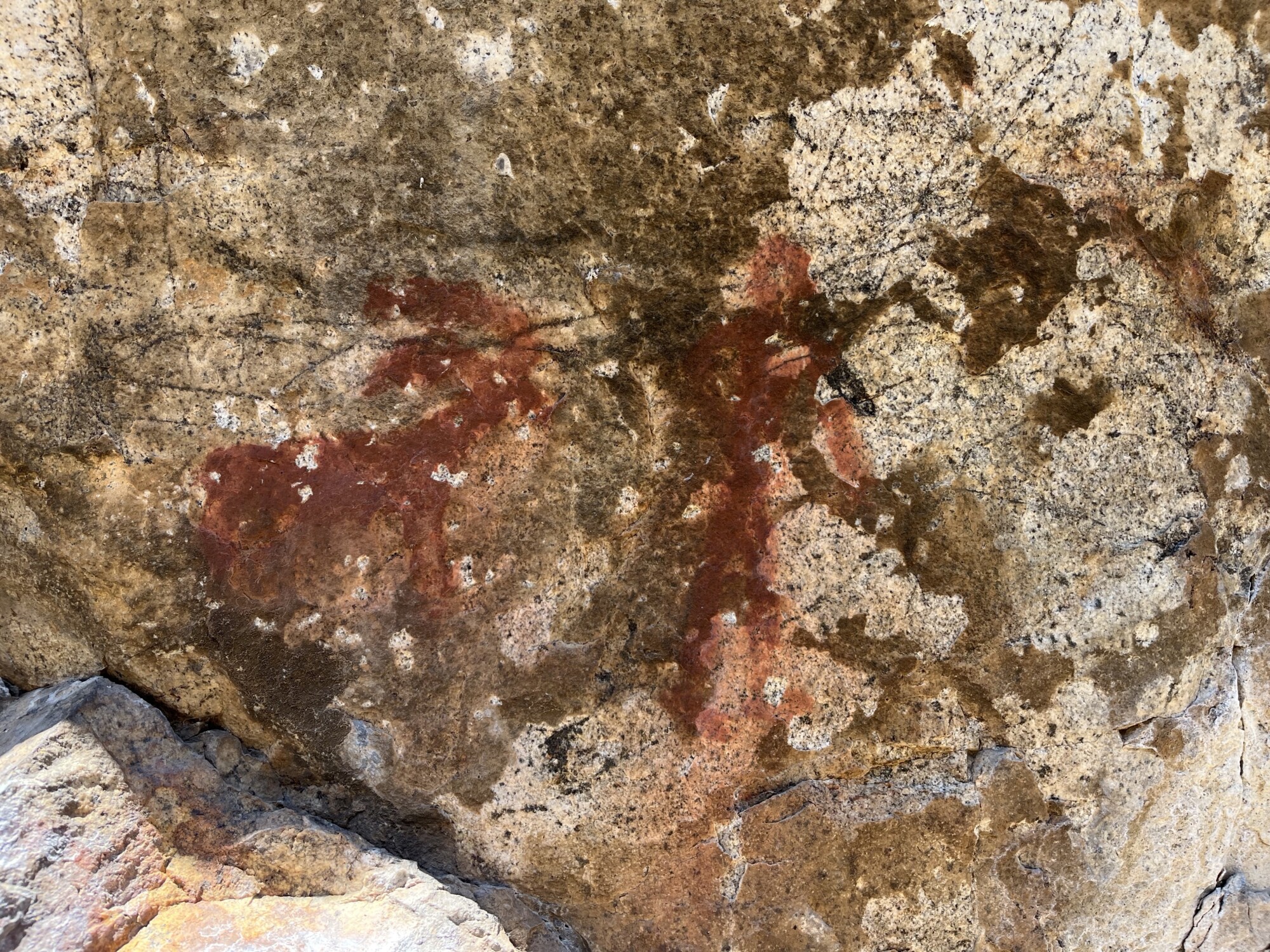
Later, downriver at one of our camps, we would see depressions in the soil on an embankment high above the river. It was there that the Tukudeka lived, perhaps, for generations until the late 1800s. In the 1860s, gold was discovered in the region. Then, in 1879, five Chinese miners were killed near Loon Creek, prompting the U.S. military to wage the Sheepeater War, citing the Tukudeka as murderers. The four months of war, during the summer of ‘79, ended in early October, also ending the wars against Native Americans of the Pacific Northwest. Today, the Tukudeka’s descendants are Shoshone-Bannock Tribes of the Fort Hall Reservation in Idaho and the Eastern Shoshone of the Wind River Reservation in Wyoming.
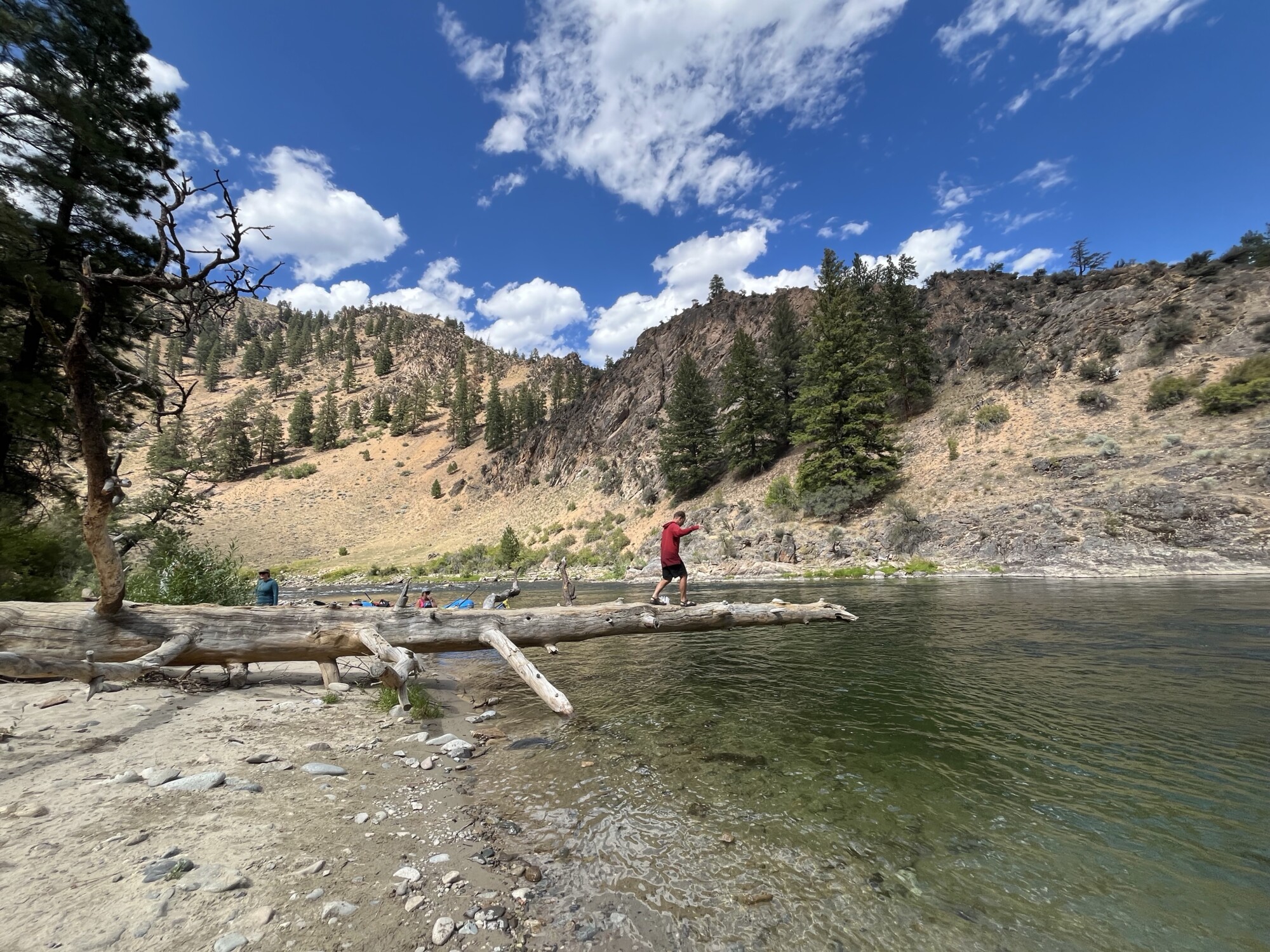
We had a two-hour paddle that afternoon after our lunch at Loon Creek. Along the way, we stopped at a tall deadfall that provided a natural diving board for jumping into the river. Telling fellow rafters that I had to do one thing to keep Father Time at bay a little while longer, I walked my way out, stood backward on the end of it, and backflipped into the river.
Sleep came easy that evening. I had nothing to do but rest. The river’s night song lulled me. Day three was on the other side of dream time.

Leave a Comment