
A Protected Sea
Dolphins swam by and underneath our kayaks, seeming not to have a care in the world that we were there. Adults and babies, numbering more than a dozen, effortlessly glided through the water. Their breathing through their blowholes was easily heard. To the east was rugged Danzante Island, its shoreline a few paddle strokes away. To the west was the impressive Sierra de la Giganta, standing sentinel over an open expanse of the blue and green Sea of Cortez.
Everything I could see around me was part of a massive protected area, from the top of the Sierra down to the water below my boat, to the offshore islands and the waters around them. Three distinct national parks all merged into one area, covering more than 500,000 acres of land and water around Loreto, Baja Sur, Mexico, protected from large-scale development. The dolphins did not know that, but perhaps they could feel it.
In 2023, the government of Mexico decreed two new national parks, Nopoló National Park (Parque Nacional Nopoló) and Loreto II National Park, which connected with Parque Nacional Bahía de Loreto (Loreto Bay National Park), a UNESCO World Heritage Site established in 1996.
Combined, the three national parks were designed as a vast watershed approach that recognized the Sierra de la Giganta mountains and the Sea of Cortez as one larger mountain-to-sea protected area. Gone were threats related to inland and shoreline development that would have brought additional environmental impacts and more overtourism through resort development. The premise was simple: what happens on land impacts the health of the sea, and by protecting it all as a system, Baja’s natural beauty abounds.
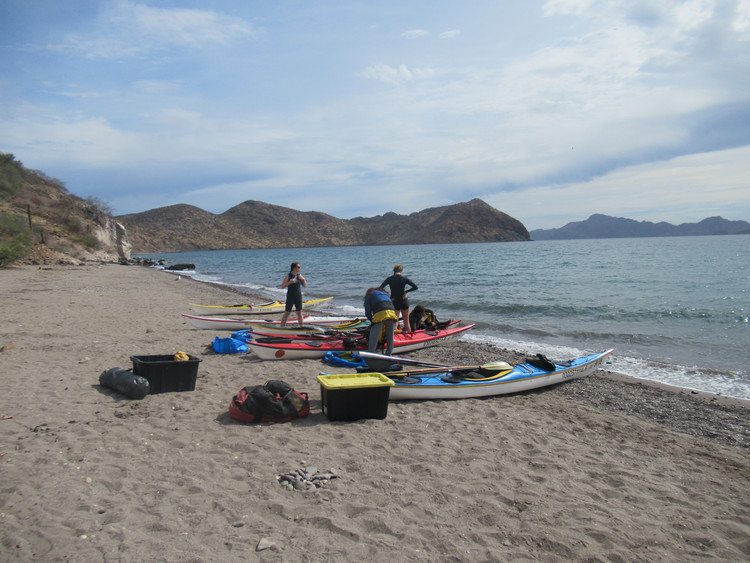
With this knowledge, I set out with a small group of fellow adventurers and our guides to sea kayak the waters off Loreto, Baja Sur for four days and three nights. After a quick water-exit lesson and practice at Playa El Quemado, as well as packing up our kayaks, with all the food and water we would need for four days of paddling and camping, we set off in the direction of what was locally called Playa Punta Coyote.
When the Wind Says No
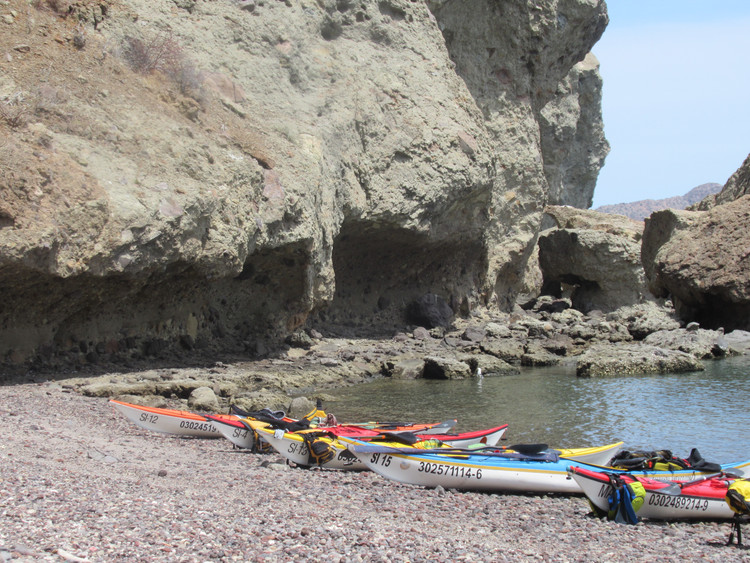
We arrived at a short stretch of beach on Coyote after a slow and easy-going paddle from Quemado. Lunch was in order, but it also gave us some time to make adjustments to our kits.
The sun blazed overhead while seabirds picked at marine detritus on the beach, finding their own lunches. The wind was picking up a bit, churning the sea into whitecaps. I had read about the infamous winds, Los Vientos of Loreto, especially those coming from the north, El Norte, and how they can turn an enjoyable trip into a serious challenge, or even a nightmare, when out on the water.
After lunch, the guides decided we should learn and practice some new strokes and techniques for making the crossing to Isla Carmen, where we were to camp for the night. It quickly became apparent that we were probably not going to make the crossing when the guide came back from the whitecaps farther out.
After demonstrating what we needed to do, he candidly expressed the challenges we would have in keeping the kayaks upright in the current conditions. We practiced the strokes.
The guides then decided, rightfully so, that we should wait until morning, when the wind would likely be much calmer. We set up camp on Coyote, ate carne asada, and settled in for the night.
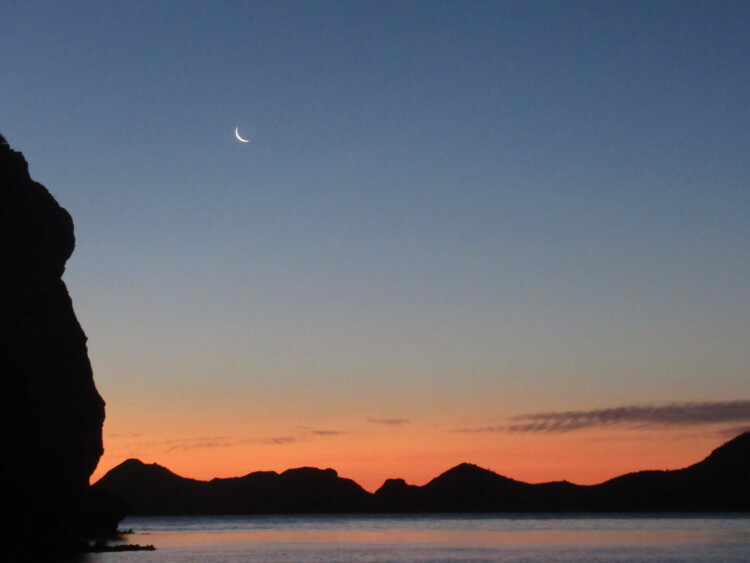
As dusk eased its way into night, silhouettes of land became blacker against the sunset-colored sky. A gentle breeze softly blew over the sheltered spit of rock and sand we were on, and the starlight, star-bright, first-star-I-see-tonight moment arrived. It was a peaceful transition from daytime into night. Sleep came easily.
Dolphins at Punta Arena
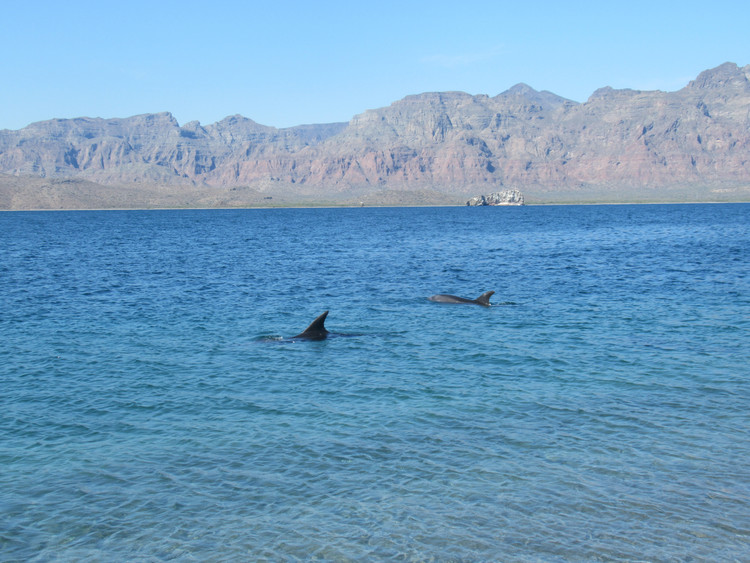
We crossed over to Danzante Island mid-morning without any difficulty. Heading south, it was at Punta Arena where we saw the dolphins. We beached our boats and marveled at the sight.
At one point, a dolphin leaped completely out of the water. Were they playing? Showing the little ones what they could do? Fishing for a meal?
Camp at Playa Honda
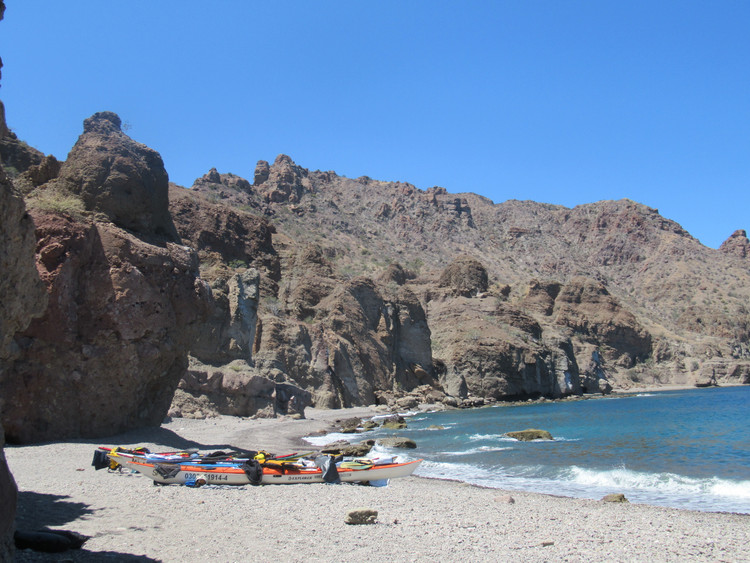
Back in our kayaks, we paddled south along Danzante and made our way around the point before heading in a northerly direction to Playa Honda on the “backside,” or east side, of Danzante.
A stiff headwind made for a strenuous paddle. Seeing the small, protected inlet of Honda and knowing it would be our camp for two nights, I was delighted. With a stunning backdrop of rocky crag modestly adorned with desert shrub, it looked desolate.
One by one, we paddled into shore, with one of the guides directing us in for a smooth beach landing. With the kayaks safely stowed above the waterline, we had nothing to do but whatever we wanted to do.
Zero mobile service meant being unplugged. For the next few hours, we sat, ate, chatted, and pretty much did nothing.
Part 2 continues the journey through Loreto’s protected waters.
Read More: SUP the Salt River in Arizona

Beautiful writing about such a magical place! Curious, do you know if one can kayak in Loreto Bay where the Blue Whales are?
Thanks, Ali. Yes, you can see the blue whales in Loreto. I think some greys make their way up that way, too. Really beautiful place and Sea Kayak Baja Mexico is a great guide service. Cheers, James.